
History of Kamrunag Temple: Kamrunag Devta, Sacred Lake and Gold Offerings
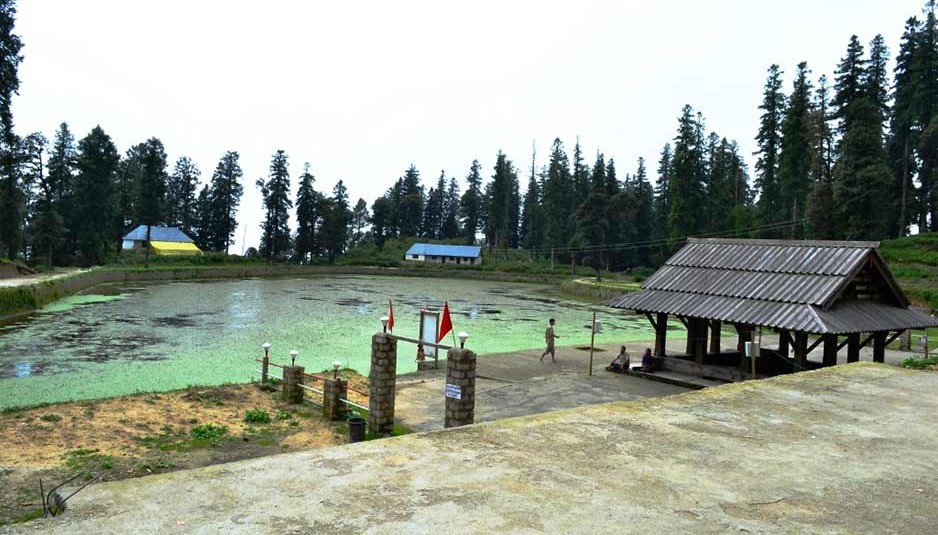
Hidden in the forests above Mandi, Kamrunag Temple does not feel like a place built to impress visitors at first glance. There are no towering gateways or loud tourist streets around it.
The experience begins much earlier, on the mountain route itself, where the air turns cooler, the road slowly gives way to forest, and the journey starts feeling less like sightseeing and more like a quiet visit to something deeply protected.
For generations, people have come here to seek blessings from Kamrunag Devta, the rain deity worshipped across this part of Himachal Pradesh.
Travelers often arrive because they have heard about the lake beside the temple, where devotees offer coins, silver, and even gold. But once you understand the stories connected with Kamrunag, the place becomes more than a mysterious lake or a scenic trek. It becomes a window into how faith, folklore, and nature continue to live together in the Himalayan villages.
“The silence around Kamrunag Lake made the visit feel deeply spiritual. Standing near the temple, I could understand why devotees see this place as sacred, peaceful, and closely connected with generations of faith.” – Antra Sonkhla, Founder of HikeXplorer
Why is Kamrunag Temple Famous?
Kamrunag Temple is famous because it brings together three things that rarely remain so closely connected today: a local deity, a sacred mountain lake, and a tradition of offerings that has continued for generations. Most visitors first hear about the temple because of the gold and silver believed to rest beneath the water, but for local devotees, that is only one part of the story.
The real importance of Kamrunag lies in the faith surrounding Kamrunag Devta. People from nearby villages and other parts of Himachal visit the temple to pray for blessings, especially for rain, prosperity, and protection. The temple is also linked with local versions of the Mahabharata, which gives the destination a legendary character.
This combination of belief, natural beauty, and living tradition is what makes Kamrunag different from many other places in Himachal Pradesh.
The setting adds to its meaning. The temple stands near Kamrunag Lake, surrounded by forests and mountain slopes. Reaching it usually involves a walk from the Rohanda side, and that slow approach matters. By the time visitors reach the lake, the journey has already created a sense of distance from everyday life. That is one reason the place feels peaceful rather than merely scenic.
What is the History of Kamrunag Temple?
The history of Kamrunag Temple is not preserved in the same way as the history of many large temples in India. There are no widely known inscriptions that clearly tell us the exact year of construction or the name of a ruler who built it. Its story has survived mainly through local memory, oral traditions, temple customs, and the faith of communities that have worshipped Kamrunag Devta for centuries.
This does not make the temple less important. In many parts of Himachal Pradesh, especially in mountain villages, history has often lived through festivals, rituals, and stories told by elders rather than through written records. Its past is understood not only through dates but through the way people continue to visit, pray, and pass the legend forward.
Local tradition connects the temple with Kamrunag Devta, who is worshipped as a powerful deity associated with rain and protection. Over time, the temple and lake became inseparable in the religious life of the region. Devotees did not simply come to see a structure; they came to honor a presence they believed could bless their homes, fields, and families.
Because of this, the most honest way to understand Kamrunag Temple is to see it as a living heritage site. Its importance comes from continuity. The same beliefs that brought earlier generations to this mountain still bring people here today.
Who is Kamrunag Devta?
Kamrunag Devta, also known locally as Bada Dev, is one of the most respected deities of the Mandi region in Himachal Pradesh. He is widely worshipped as the God of Rain, a belief that holds deep meaning in mountain communities where farming, forests, and seasonal life have always depended on weather.
For many families, praying to Kamrunag Devta is not only a religious practice but also a way of seeking blessings, protection, and balance with nature. People visit the temple during important moments in life, including festivals, family ceremonies, agricultural seasons, personal vows, and times of gratitude.
To understand his importance, it helps to understand Himachal’s devta tradition. In many villages, local deities are seen as guardians of the community, not distant figures from mythology. Kamrunag Devta belongs to this living tradition. Some devotees come after a wish has been fulfilled, some come before beginning something important, and others visit because their families have followed the same faith for generations.
Is Kamrunag Devta Connected to the Mahabharata?
Kamrunag Devta is connected with the Mahabharata through local belief, but this story should be understood as folklore and religious tradition rather than documented history. Different villages and families may tell the details in slightly different ways, which is common in Himalayan oral traditions.
According to one popular version, Kamrunag Devta is associated with Barbarika, the powerful warrior known for his extraordinary strength and devotion. Barbarika wished to take part in the Kurukshetra War and had promised that he would support the weaker side. This made his role very important, because whichever side began losing would receive his support.
Lord Krishna understood that Barbarika’s vow could change the course of the entire war. If he supported the weaker side again and again, the balance of the battle would keep shifting and the war could become impossible to resolve. To test his devotion and prevent this, Krishna asked Barbarika for the ultimate sacrifice: his head.
Barbarika accepted the request without hesitation, but he made one wish before giving his head. He wanted to witness the Mahabharata war. Krishna granted his wish, and according to the belief, Barbarika’s head was placed at a high point from where he could watch the battle unfold.
In the Kamrunag tradition, this act of sacrifice, devotion, and divine blessing is linked with the deity worshipped in the Mandi region. This is why many people connect Kamrunag Devta with the Mahabharata story. Whether someone reads it as mythology, folklore, or faith, the story explains why Kamrunag is remembered as a powerful and deeply respected deity.
Why is Kamrunag Lake Considered Sacred?
Kamrunag Lake is considered sacred because it is closely connected with Kamrunag Devta and the rituals performed at the temple. The lake is not treated as a separate tourist attraction. For devotees, it is part of the same spiritual space as the shrine. Prayers, offerings, and the stillness of the water all form part of the experience.
The lake sits high in the mountains, surrounded by forests and slopes that make the place feel naturally secluded. This setting adds to the devotion people feel there. When visitors reach the lake after the climb, many slow down without being told. Some stand quietly near the water, some fold their hands, and others move towards the temple before offering prayers.
Its sacredness also comes from continuity. People have believed in the lake’s spiritual importance for generations. Even today, the offerings made into the water are not treated casually. The lake is respected as a place where promises, gratitude, and faith are expressed without the need for display.
Why Do People Offer Gold and Silver in Kamrunag Lake?
The tradition of offering gold, silver, coins, and money in Kamrunag Lake is one of the most talked-about customs associated with the temple. Many first-time visitors find it surprising because the offering is made directly into the water rather than placed before the idol or deposited in a donation box.
The meaning behind the custom is simple: gratitude. Devotees believe that when their prayers are answered, they should return to Kamrunag and make an offering to the deity.
The value of the object is less important than the emotion behind it. A coin offered with faith may carry as much personal meaning as a silver ornament or a piece of gold.
Over the years, this tradition has created many stories about hidden treasure lying at the bottom of the lake. These stories naturally attract curiosity, but focusing only on the treasure misses the point. For local people, the lake is not a place to measure wealth. It is a place where faith is returned in the form of an offering.
This is also why the custom continues to feel powerful. It is not performed for tourists. It is part of a relationship between the devotee and Kamrunag Devta, carried forward quietly from one generation to the next.
What Happens During the Kamrunag Fair?
The Kamrunag Fair is one of the most important annual events connected with the temple. It is usually held around mid-June, when large numbers of devotees travel to the mountain site to offer prayers and take part in the religious gathering. During this time, the otherwise quiet route becomes full of movement, voices, and shared devotion.
For local communities, the fair is more than a day of worship. It is a cultural meeting point. Families arrive together, elders tell stories, and younger generations see traditions being practiced in front of them rather than only hearing about them. In this way, the fair helps keep Kamrunag’s heritage alive.
The atmosphere during the fair is very different from an ordinary visit. On normal days, Kamrunag feels calm and secluded. During the fair, the same place becomes a center of collective faith. The offerings made to the lake, the prayers at the temple, and the gathering of devotees all show how deeply Kamrunag remains connected with the people of Mandi and nearby regions.
What Should Visitors Know Before Going?
Kamrunag is not a destination to approach like a casual viewpoint. The temple and lake are religiously important, so visitors should dress modestly, avoid loud behavior, and respect local customs around the shrine and water. Photography may be common, but it should never disturb people who are praying or performing rituals.
The route generally involves a trek from the Rohanda side, often described as around five to six kilometres, depending on the exact starting point and path used. The climb can feel steep in sections, so comfortable shoes, water, and a light jacket are helpful. The weather can change quickly in the mountains, especially at higher elevations, so it is better to start early and avoid travelling casually during heavy rain or snow.
The best time for most visitors is usually from late spring to autumn, when the route is more manageable. The fair period in June is meaningful for devotees, but it can also be crowded. Travelers looking for a quieter experience may prefer visiting outside the main fair days while still respecting the temple’s spiritual environment.
If you are planning the trip from Chandigarh, read our complete Chandigarh to Kamrunag distance, route and trek guide before you go.
Final Thoughts
Kamrunag Temple is not the kind of place that can be understood only through distance, altitude, or travel facts. Its real meaning lies in the stories people carry, the prayers they make, and the quiet faith they leave behind in the lake. The temple may be small, but the tradition around it is vast.
For travelers, Kamrunag offers a chance to see a side of Himachal that is often missed in quick itineraries. It is a place where mythology is still spoken in everyday language, where a lake is treated with the respect of a shrine, and where devotion is measured not by noise but by sincerity.
Long after the trek is over, most visitors remember Kamrunag not only for its mountain views or the mystery of hidden offerings, but for the rare stillness that surrounds the lake. That stillness is the heart of Kamrunag, and perhaps the reason people continue to return.
About the Author: Antra Sonkhla

editor's pick

news via inbox
Nulla turp dis cursus. Integer liberos euismod pretium faucibua