
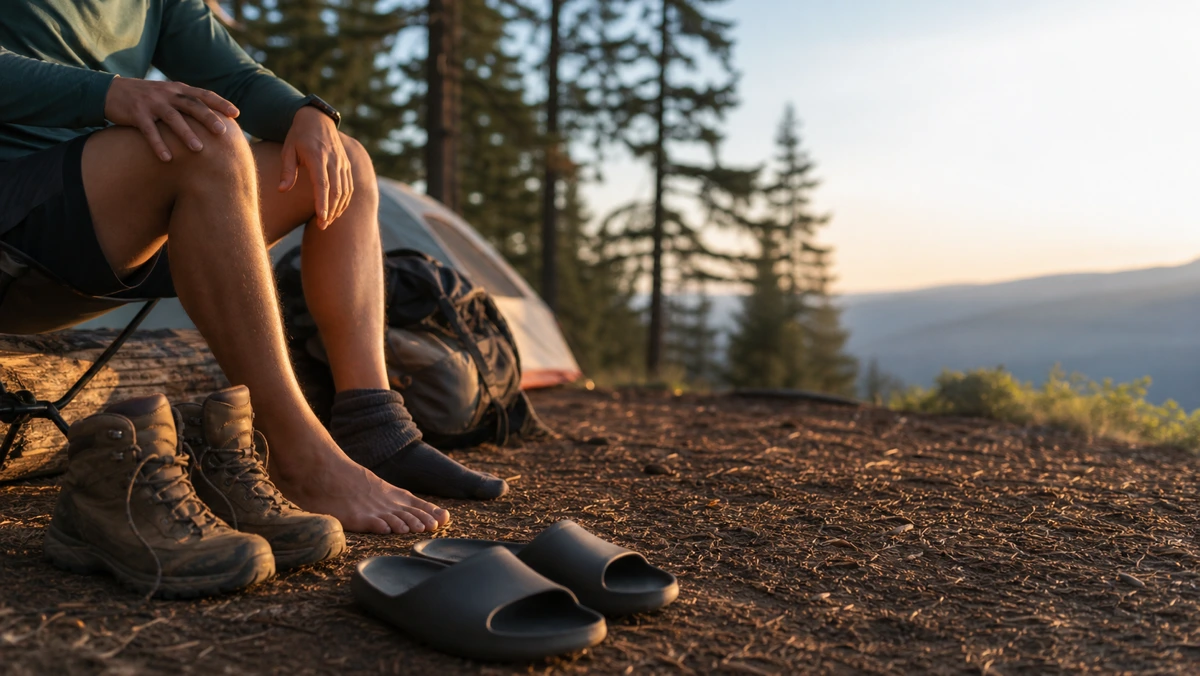
Why Your Feet Still Hurt Even After Taking Off Your Hiking Boots
Every hiker knows the relief of finally unlacing a pair of boots. It might happen beside a tent, at the back of a car, or on the porch of a mountain cabin. The laces loosen, the tongue opens, and for a few seconds, your feet feel as if they have been released from a long negotiation.
Then you stand up. Instead of feeling fresh, your feet feel bruised, stiff, hot, or strangely flat. The soles may throb when you walk across camp. Your arches may feel tired even though the boots are off. Your toes may want space, but your midfoot still wants support. For many hikers, this is the confusing part: if the boots were the hard work, why does the ache continue after they are removed?
The Post-Hike Ache: What Is Actually Happening?
During a long hike, your feet do far more than carry your body from one point to another. They absorb impact, stabilize you on uneven ground, adapt to rocks and roots, and help push you forward on climbs. Add a backpack, wet trail conditions, or several miles of downhill walking, and that workload increases quickly.
The arch of the foot is especially busy. It works like a flexible bridge, changing shape as you load and unload each step. The plantar fascia, the band of tissue running along the bottom of the foot, helps manage that tension. Over the course of a long day, this system can become fatigued. The foot may spread slightly inside the boot, the arch may feel less springy, and the small stabilizing muscles around the ankle and midfoot may keep firing long after the hike is over.
That is why your feet can feel sore even when your skin is not blistered. The ache is not only about pressure points. It can also be about tired support structures, overloaded stabilizers, and a nervous system that still feels like it is walking on uneven terrain.
This is also why two hikers can finish the same route with very different symptoms. One person may complain about hot spots around the heel. Another may feel a dull ache under the arch. Someone else may notice stiffness only after sitting down for dinner and standing back up. The source is not always the boot itself. It is often the combination of trail surface, fatigue, pack weight, pace, and how much support the foot had after the hiking was done.
Downhill miles can make this worse. On descents, your body repeatedly brakes forward motion. The toes press toward the front of the boot, the heel tries to stay planted, and the arch helps control impact. Even if the trail does not feel difficult in the moment, the repetitive braking can leave the bottom of the foot irritated by the time you reach camp.
Why Taking the Boots Off Is Only Step One
Removing hiking boots solves one problem: confinement. Your feet finally get space and air. But space alone does not always create recovery. If your feet have spent hours trying to stay stable, they may still need guidance when you switch into camp shoes or sandals.
This is where many hikers make a reasonable but incomplete choice. They reach for the softest slides they can find because softness feels like comfort. In the first minute, that can be true. A plush foam footbed gives instant relief from boot pressure. But if the material collapses under the arch or lets the heel wobble, your foot may have to keep working to stay centered.
Imagine finishing a long drive and then trying to rest in a sagging chair. It might feel cozy at first, but your back never fully relaxes because it has to keep adjusting. Feet can behave the same way. After miles of trail impact, they often appreciate comfort, but they also need enough structure to stop overcorrecting.
That is the difference between relief and recovery. Relief is the first pleasant feeling when pressure disappears. Recovery is what happens over the next hour, evening, and morning. A shoe can provide relief by being soft, open, and easy to slip on. But if it does not help the foot stay aligned, it may not support recovery very well. Hikers need both: immediate comfort and enough stability to let tired tissues calm down.
The “Cloud” Trap: When Softness Becomes More Work
The “Cloud Trap” is the belief that softer is always better. For lounging briefly, soft footwear may be fine. For recovery after a demanding hike, it can be too passive. If a slide twists easily, folds through the middle, or sinks under the arch, it may not give tired feet the stable base they are asking for.
On soft, unstable footwear, the body still has to make small corrections. The toes may grip. The ankles may make tiny side-to-side adjustments. The arch may keep searching for support that never arrives. None of this is dramatic enough to feel like exercise, but after a long day on the trail, those small corrections can add up.
This does not mean camp footwear should feel hard or rigid in an uncomfortable way. The better goal is balanced support: enough cushioning to soften contact with the ground, enough shape to support the arch, and enough heel stability to keep the foot from sliding around.
What to Do in the First 30 Minutes After a Hike
The first half hour after a long trek is a useful recovery window. You do not need a complicated routine, but a few small choices can make your feet feel better through the evening.
First, loosen the boots before pulling them off. If your feet are swollen, yanking at tight footwear can irritate already tired tissues. Open the laces fully, remove the boot slowly, and give your toes a few minutes of space. If your socks are damp, change into a dry pair. Moisture makes skin more vulnerable to friction, and dry socks can make camp footwear feel more comfortable right away.
Second, walk a few easy steps before sitting for a long meal or drive. After hours of repetitive movement, suddenly stopping can make stiffness more noticeable. A short, gentle walk around camp helps the feet transition from trail effort to rest. This is not a workout; it is simply a way to avoid going from high demand to total stillness too abruptly.
Third, choose footwear that feels stable on the ground you are actually using. Camp is not always flat. You may be walking on gravel, packed dirt, wood platforms, wet grass, or uneven parking-lot pavement. A shoe that feels soft indoors may feel wobbly outside. If your feet already feel overworked, that wobble can be enough to keep the ache alive.
What Stable Recovery Footwear Should Do
Good recovery footwear should help the foot settle. For hikers, that usually means three practical things.
1. Support the Arch Without Forcing It
The arch does not need to be pushed aggressively upward. It needs a supportive shape that meets the foot where it naturally wants help. A gentle, structured arch can reduce the sense that the middle of the foot is collapsing after a long day.
2. Hold the Heel in Place
Heel cupping matters because the heel is the rear anchor of the foot. If the heel slides around, the rest of the foot often compensates. A stable heel area can make camp walking feel calmer and less sloppy, especially when you are moving over gravel, damp grass, or uneven cabin floors.
3. Bend Where the Foot Bends
Footwear should usually bend at the ball of the foot, not fold through the arch. If a sandal folds in half through the middle, it may feel easy in your hands but unstable under your feet. A more supportive design allows forefoot motion while keeping the midfoot from collapsing.
For hikers who want to compare symptoms and support options in more detail, this foot pain relief guide offers a practical starting point for understanding where foot discomfort shows up and what kind of support may help.
Common Camp Footwear Mistakes Hikers Make
The first mistake is packing footwear only because it is light. Weight matters, especially on backpacking trips, but the lightest option is not always the most useful after a demanding trail day. If a sandal is so thin that you can feel every stone underfoot, your feet may never get a meaningful break.
The second mistake is assuming that indoor slippers and outdoor recovery shoes do the same job. A soft house slipper may be comfortable on a clean floor, but it may not be stable enough for camp tasks such as walking to the water source, moving around a fire ring, or stepping over roots in low light. Camp footwear needs enough grip and shape for real terrain, not just enough softness for lounging.
The third mistake is ignoring the heel. Many hikers focus on arch support and cushioning, but the heel is just as important. If the heel moves too much, the rest of the foot has to react. A more secure heel area can make the entire shoe feel calmer, even if the cushioning is not extremely thick.
The fourth mistake is waiting until pain is severe before changing footwear habits. Recovery shoes are not only for hikers with known foot problems. They can be part of a basic trail routine, like changing socks, airing out boots, drinking water, and checking for hot spots. The goal is not to treat a serious injury at camp. The goal is to reduce unnecessary strain before it becomes tomorrow’s problem.
The Hiker’s Squeeze Test
- The twist: Hold the shoe at both ends and try to wring it like a towel. If it twists with almost no resistance, it may be too unstable for recovery after a long trek.
- The arch press: Press your thumb into the arch area. If the structure collapses immediately, it may not support your foot once your full body weight is on it.
- The fold: Bend the shoe gently. It should flex near the ball of the foot, not fold through the center of the arch.
- The heel check: Place your heel in the shoe and shift your weight. If your heel rolls or slides easily, the base may not be steady enough for tired feet.
Choosing Camp Footwear for the Next Morning
Recovery footwear is not only about how you feel at camp. It can affect how ready you feel the next morning. If your feet stay irritated all evening, the first mile of the next hike may feel harder than it should. If your feet are allowed to settle into a more supported position, you may start the next day with less lingering stiffness.
When packing for a trip, hikers often think carefully about boots but treat camp shoes as an afterthought. That is understandable: boots handle the trail, while camp shoes seem like a comfort item. But for multi-day hikes, road trips with heavy walking, or travel days that mix city pavement with trails, recovery footwear deserves more attention.
Look for a pair that is easy to slip on, breathable enough for tired feet, stable enough for uneven ground, and shaped enough to support the arch. If you can use the squeeze test before buying, even better. Your feet do not need luxury after a hike. They need relief that does not create more work.
A Simple Packing Checklist
Before your next hiking trip, think about camp footwear the same way you think about layers. You want the right tool for the conditions, not just the most comfortable-looking option in the closet.
- For car camping: Choose recovery footwear with more structure, since weight and pack space are less important.
- For backpacking: Look for the best balance of low weight, stable sole shape, and enough durability for campsite terrain.
- For wet trails: Prioritize quick-drying materials and grip. A slick outsole can turn a simple camp shoe into a hazard.
- For multi-day trips: Avoid anything that collapses under the arch. Small support problems become more noticeable after repeated trail days.
- For travel days: Pick something you can wear after hiking and around lodging, so your feet are not forced back into boots immediately.
This checklist is intentionally simple because hikers already make enough gear decisions. The main question is whether the shoe allows your foot to relax without requiring it to work harder. If it does, it belongs in the recovery conversation. If it only feels soft for a moment and then leaves you shuffling around camp, it may not be doing enough.
Final Thoughts
Foot pain after taking off hiking boots is common, but it is not mysterious. Your feet have been stabilizing, absorbing impact, and adapting for hours. Once the trail ends, they do not just need softness. They need a chance to stop bracing.
The next time your feet still ache at camp, do not assume the only answer is a thicker cloud of foam. Check whether your recovery footwear supports the arch, steadies the heel, and bends in the right place. The right pair can make the quiet hours after a hike feel more restorative, and it may help you step onto the trail the next morning with more confidence.
About the Author: Antra Sonkhla

editor's pick


news via inbox
Nulla turp dis cursus. Integer liberos euismod pretium faucibua