
Monsoon Magic in Tirthan Valley: Worth the Risk?
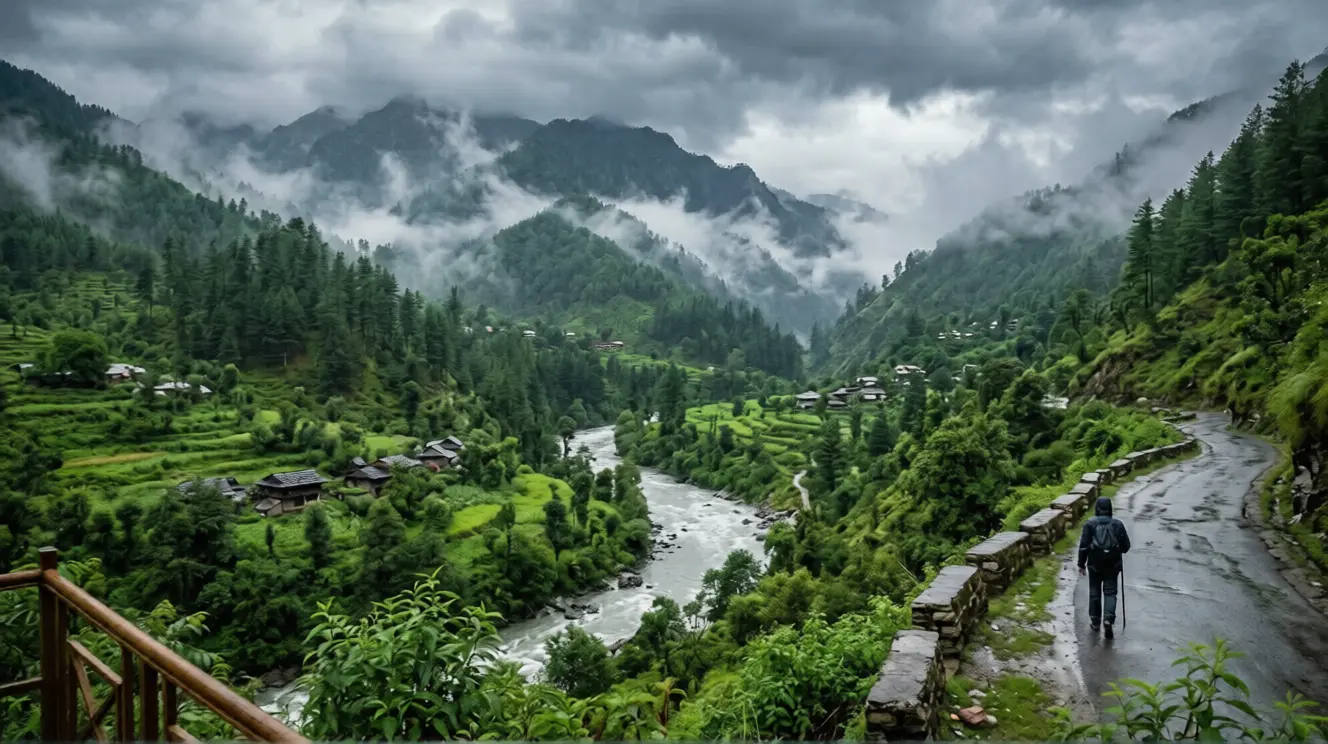
Most tourists leave when the rain comes in June. They see the weather and book flights home. But that’s exactly when Tirthan Valley becomes most beautiful.
The small waterfalls turn into big, powerful streams. The quiet river becomes loud and strong. Everything feels alive and real. You get to see Tirthan Valley without crowds, without pressure, without pretence. The lush green forests are at their fullest. The air smells clean. Local people are relaxed because the tourist season feels distant.
The Real Risks You Need to Know
Let’s be honest. Monsoon rain in the mountains is serious business.
The road from Aut to Gushaini can be dangerous after heavy rain. Landslides do happen. The river crossing can be tricky. You should check the road conditions before traveling. Ask locals about the weather that morning.
But here’s the thing: these are not reasons to stay home. They’re just things you prepare for and respect.
Best Time to Visit During Monsoon
Avoid July and August when rain is heaviest. Come in late June or after August 15th instead. These shoulder months give you the beauty of monsoon without the worst of the weather.
The official Great Himalayan National Park website recommends avoiding core zone treks during the monsoon due to the slippery trails. But you can still enjoy ecozone hikes and village walks, which are safer and equally beautiful
Places You Can Actually Visit
Gushaini Village — This is your gateway. It’s where you get permits for the national park. The walk to the park entry gate itself is three kilometers and absolutely beautiful in the monsoon. You pass through forests and along the river.
Rolla Trek — An easy day hike suitable for all fitness levels. Takes about four hours. The ascent is just 480 meters. You pass the village of Ropa and get panoramic mountain views.
Chhoie Waterfall — A lesser-known waterfall that’s perfect during the monsoon. It comes alive with water. Perfect for a short hike from near Gushaini.
Jibhi Village — About forty minutes from Gushaini. Charming, quiet, and great for village walks and meeting local people.
Jalori Pass — A scenic drive, not a monsoon trek. You can visit this and enjoy the views safely.
Where to Stay — Homestays and Hotels
Homestays are better than hotels in Tirthan Valley. The owners know the valley and can tell you honestly if roads are unsafe that day.
Recommended Homestays:
Usha Homestay — Located eight kilometers from Gushaini center. Known for excellent hospitality and an on-site restaurant. Website: wanderon.in/homestays-in-tirthan-valley
Tirthan View Homestay — Run by the Negi family. Guests say you feel like family here. Trusted by TripAdvisor reviewers. Website: tripadvisor.in
Hotel Tirthan Ecostay — Offers a peaceful retreat with a garden. Kind hosts and good parking. Website: holidify.com
Virman Hillside Resort — Located in Gushaini with river views. Has a terrace and a restaurant. Website: tirthanvalleystay.com
For more options, visit Tirthan Valley Stay dot com or check Wanderon and Travel Triangle for the latest deals.
Permits and Official Requirements
You need a permit to enter the core zone of the Great Himalayan National Park. Get permits at the Shairopa Range Office in Tirthan Valley.
Visit the official website: greathimalayannationalpark dot org for latest fees and rules. The Himachal Pradesh Tourism website also has updated information at himachaltourism dot gov dot in.
Book permits in advance during monsoon because some zones close depending on weather. Local homestays can help you arrange this.
How to Prepare Properly
Pack waterproof jackets and leech socks. Bring layers because mountain weather changes fast. Carry a backup power bank. Bring a good torch and first aid kit.
Travel with a local guide from your homestay. They know the land and can read weather patterns. Ask them about road conditions every morning before you travel.
Move slowly and don’t rush between places. Part of monsoon magic is accepting that plans change.
The Real Answer — Is It Worth It?
Yes. It’s absolutely worth it. But only if you come with the right mindset.
Come expecting rain and mist and river sounds. Come ready to let go of Instagram moments and perfect photos. Come ready to actually talk to people and listen to their stories. The magic of Tirthan in monsoon isn’t about checking boxes. It’s about feeling something real.
The river at full power is something to witness. The fireflies come out at night. The food tastes better. The people are warmer. And you go home with memories that last longer than vacation photos.
Yes, there’s risk. But the magic is real, too.
About the Author: Antra Sonkhla

editor's pick

news via inbox
Nulla turp dis cursus. Integer liberos euismod pretium faucibua